The courage and responsibility of public leadership
The sidelines are comfortable – shouting at a referee decision in a footy game on the telly, being a pinot fuelled expert on the State budget over dinner, hammering out comments on Facebook, X or LinkedIn that will never be said in person. These behaviours can range from benign to destructive anonymity without accountability, the shadows of which are an ever present threat for those who choose to show up and speak up.
Everyone of us has been in a moment when someone needs to step forward. Many are called, but few actually choose to place themselves in the public arena, knowing your decisions will be questioned, your judgement tested and your motivations scrutinised.
As a species designed for connection and safety in numbers, the decision to be seen in roles of public life and civic duty are one of the most challenging forms of leadership there is.
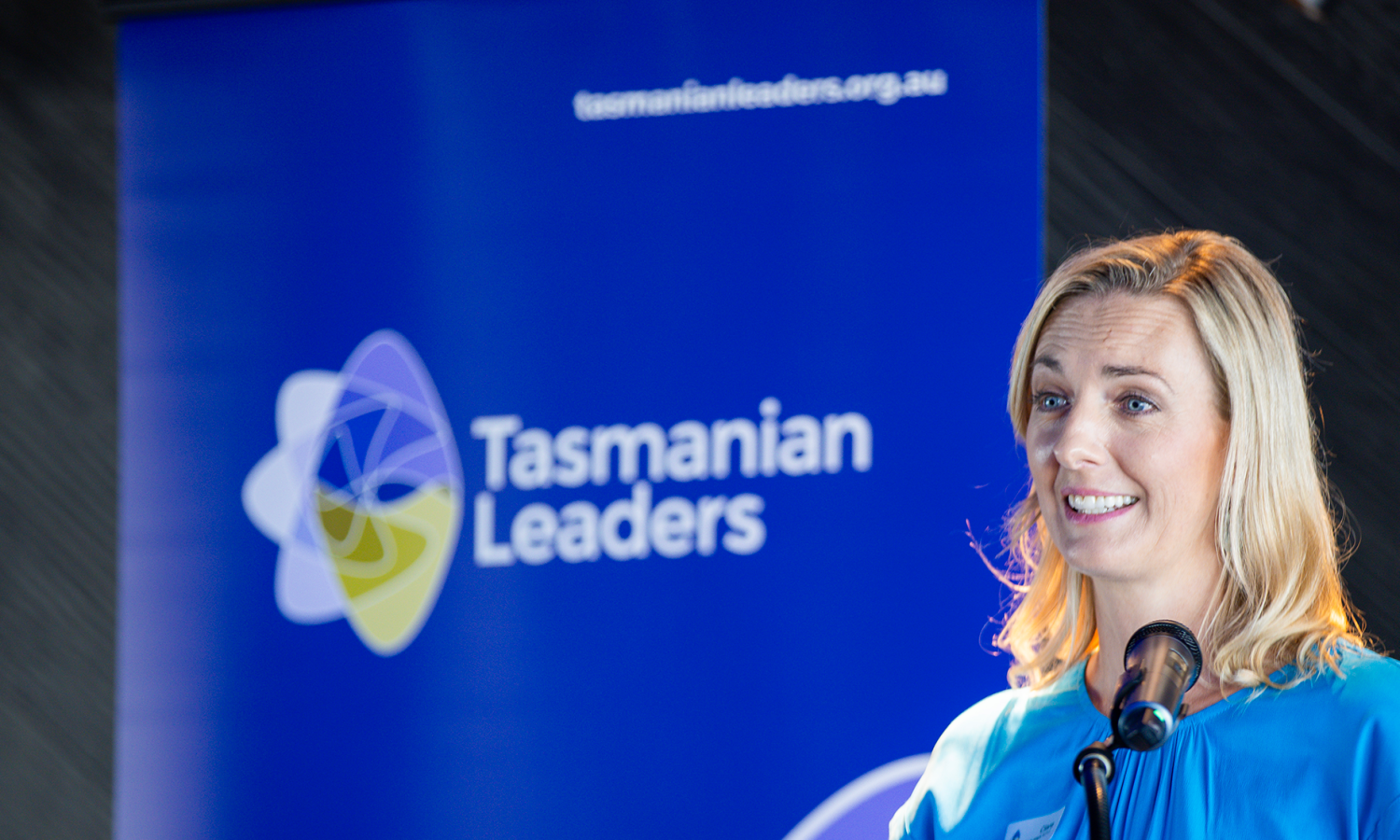
Across Tasmania, Tasmanian Leaders alumni have continued to make that choice. Some have become mayors and councillors. Others have entered Parliament from across the political spectrum. Others like TLP graduates Kristen Desmond, John Kamara, Hannah Moloney, Dr Fiona Beer, Dr Miranda Hann have become advocates and activists for their causes and communities. They have brought different values, different experiences and different views of the future, yet they share something more fundamental: a willingness to exchange commentary for contribution, even when it is terrifying at the outset to make that step.
Names like Mayor Teeny Brumby, Mayor Cheryl Fuller, former Mayor Craig Perkins, Ruth Forrest MLC, Casey Hiscutt MLC, Jess Greene MP and Clare Glade-Wright MLC remind us that leadership doesn’t end when the Tasmanian Leaders program finishes. For some, it becomes the beginning of a very public commitment to shaping the future of the places they care about.
All of these civic leaders arrived in the public gaze of politics whatever their level of government through very different routes. Some came through business, industry, through agriculture and the stewardship of land and food security, others through community development, education and a passion for future Tasmanians, through midwifery and the drive to bring equity to healthcare.
They represent different generations, different communities and different political perspectives. Yet each chose to take their experience beyond the boundaries of their own profession and place it in service of something larger than themselves.
Public leadership is often viewed through the lens of elections, policy or political debate. Yet beneath those visible moments sit the grind and the reality of the work. Regional politicians driving endlessly to Parliament and back to make their places visible. Deciphering the complexity of legislation, papers, proposals, crystal balling the many future impacts of their here and now decisions.
For all elected representatives there is the 24/7 job of meeting constituents where they are at. Listening before speaking. Balancing competing interests and conflicts. Holding uncertainty. Making decisions without the luxury of perfect information. Remaining connected to community while navigating issues that rarely have simple solutions and are frequently heated, passionate and personal. And a lot of scones and savoury toast.
Stepping into all levels of public life asks people to work in the liminal space between conviction and curiosity and stay steady in that uncomfortable ambiguity.
In our twenty years of place based leadership, theory to practice, Tasmanian Leaders has created opportunities for people from every corner of the state to sit alongside those whose experiences, politics and opinions differ from their own. Industry meets community. Local government meets business. Agriculture meets education. Health meets the arts. Heavy machinery meets welfare.
Participants learn that progress rarely emerges from agreement alone. It grows through respectful challenge, shared purpose and relationships strong enough to not just hold but seek different perspectives as an imperative to whole of system embrace.
Perhaps that’s why so many Tasmanian Leaders graduates continue to step into civic leadership, not for positional power, for most that was the last thing on their mind.
Their own inner call was the call to lead. When they were called, they chose the moment to emerge.
Democracy depends on people prepared to risk the safety of the sidelines for the pursuit of the common good ahead of personal certainty.